Energy / FinTech
Live projectBoostXpress
Reimagining the everyday fueling experience.
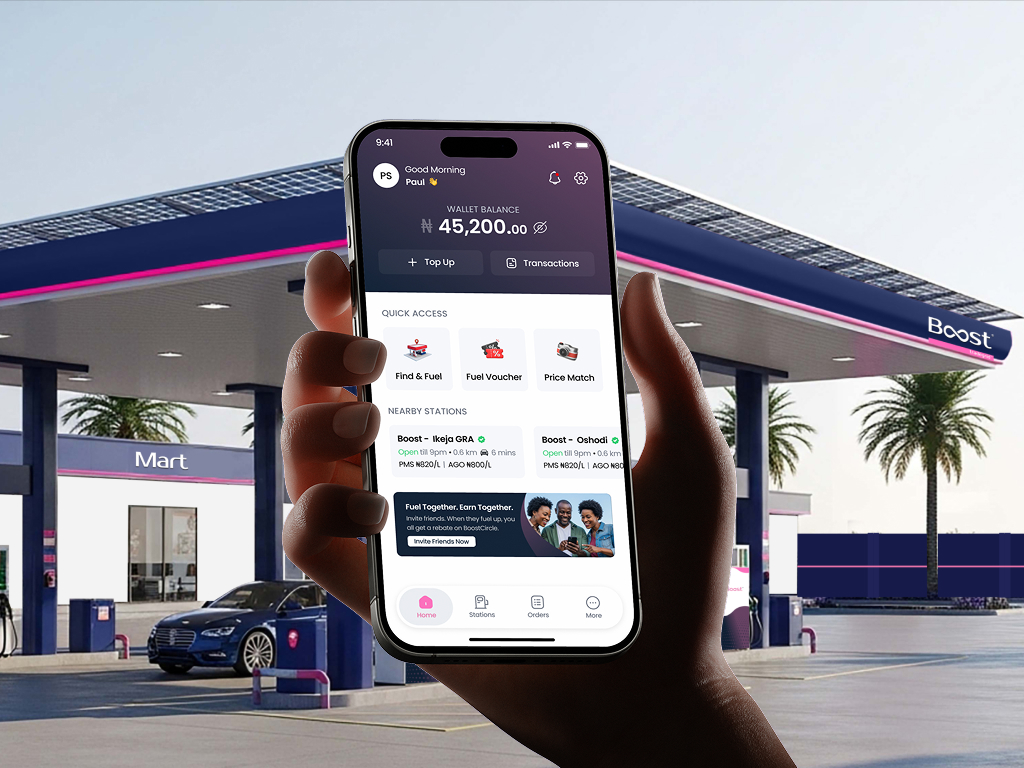
A digital fueling ecosystem connecting station discovery, payments, real-time dispensing, rewards, and financial services.
- Role
- Product Designer
- Company
- TradeGrid
- Platform
- iOS · Android · Station POS
- Scope
- Product Strategy · UX Design · UI Design · Prototyping
- Timeline
- [Add timeline]
The problem
Fueling was still a fragmented experience.
Buying fuel is simple physically, but the experience around it is not. Customers often had to search for stations manually, arrive without knowing whether their preferred fuel was available, rely on cash or disconnected payment methods, and physically monitor the pump to confirm what they were receiving.
For TradeGrid, the challenge went beyond the customer app. A digital payment still had to translate into a real-world station transaction, the product needed to connect these steps into one reliable experience without adding complexity for either the customer or the station attendant.
The core UX challenge
How might we make fuel purchasing feel as transparent and predictable digitally as it is physically?
Customer
- 1.1Find station
- 1.2Select fuel
- 1.3Pay
- 1.4Receive verification code
Station
- 2.1Verify payment
- 2.2Assign pump
- 2.3Start fueling
Customer
- 3.1Monitor fueling
- 3.2Confirm completion
- 3.3Digital receipt
The challenge wasn’t simply designing a payment experience, it was connecting a digital transaction to a physical fueling operation.
The biggest trust gap appeared during fueling. Once a customer had paid, they still needed confidence that the correct product and quantity were being dispensed. This became an opportunity to make the physical fueling process visible through the customer’s phone.
My thinking
I started with the transaction, not the interface.
Rather than designing the customer app as a collection of features, I mapped the complete journey from finding a station to completing a fuel purchase. This exposed a key insight: the experience had two connected users, the customer and the station attendant, and the success of one depended on the actions of the other.
Discover → Pay → Verify → Fuel → Confirm → Complete
Make the invisible visible
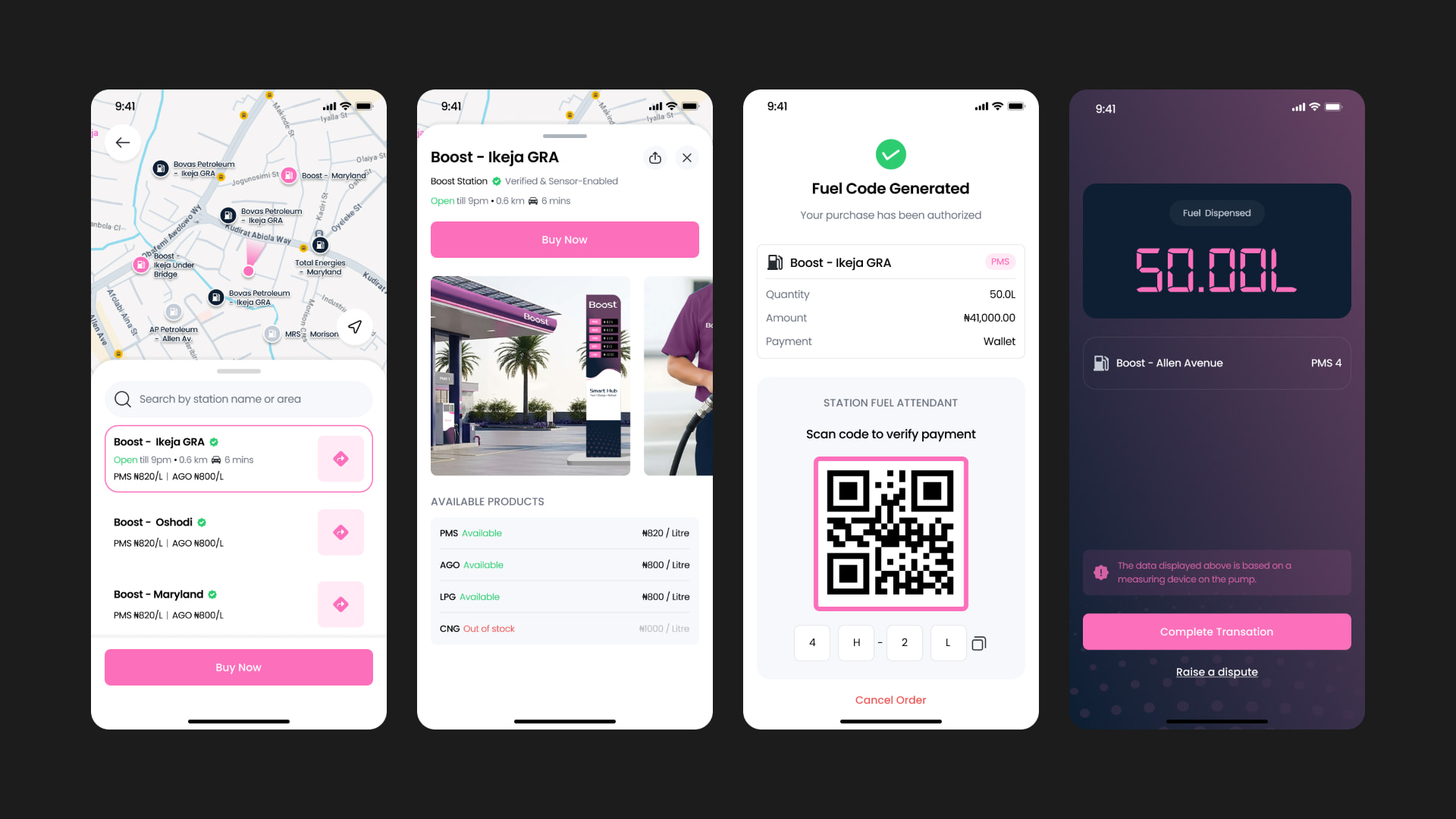
After payment, customers had little digital visibility into what was happening at the pump. I explored how the app could communicate the physical transaction in real time, leading to the live dispensing experience, fueling progress and a clear final quantity and transaction summary when dispensing ends.
Reduce operational complexity
On the station side, I designed the POS around the attendant’s actual workflow: verify payment → assign pump → start fueling → complete transaction. The customer and attendant therefore see different interfaces, but remain connected to the same transaction state.
Digital payment ≠ completed transaction
A payment confirmation alone wasn’t enough. The transaction still needed to move through verification, pump assignment, fueling, and completion.
Decision, Treat the entire fueling journey as one connected transaction state.
Customers need visibility during fueling
The customer shouldn’t have to repeatedly check the physical pump to understand what is happening.
Decision, Bring live dispensing feedback into the mobile experience.
One ecosystem, two experiences
Customers and attendants have different goals at the station.
Decision, Create separate customer and POS workflows connected by the same transaction lifecycle.
Rewards shouldn’t complicate the core journey
BoostCircle, Price Match, Vouchers and Boost Credit add value, but shouldn’t interfere with the primary task of buying fuel.
Decision, Keep the core fueling journey simple while layering additional value around it.
Placeholder, journey map
Service blueprint or journey map showing the shared transaction states across the customer app and the station POS, from discovery to digital receipt.
The business
From fuel transactions to a customer ecosystem.
TradeGrid’s opportunity wasn’t simply to digitize fuel payments. BoostXpress was designed to create an ongoing digital relationship with fuel consumers.
Increase digital transactions
Make fuel purchases easier to initiate and track.
Improve station engagement
Help customers discover partner stations, products, and prices.
Build retention
Use rebates, referrals, vouchers, Price Match, and campaigns to create reasons to return.
Create a foundation for financial products
Support future experiences such as Boost Credit and other TradeGrid services.
The constraint
The biggest constraint was that fueling remains physical. I couldn’t redesign the pump, the station attendant’s physical workflow, or the customer’s environment. The digital product therefore had to work with the existing station operation rather than attempt to replace it, and that constraint shaped the entire product architecture.
The solution
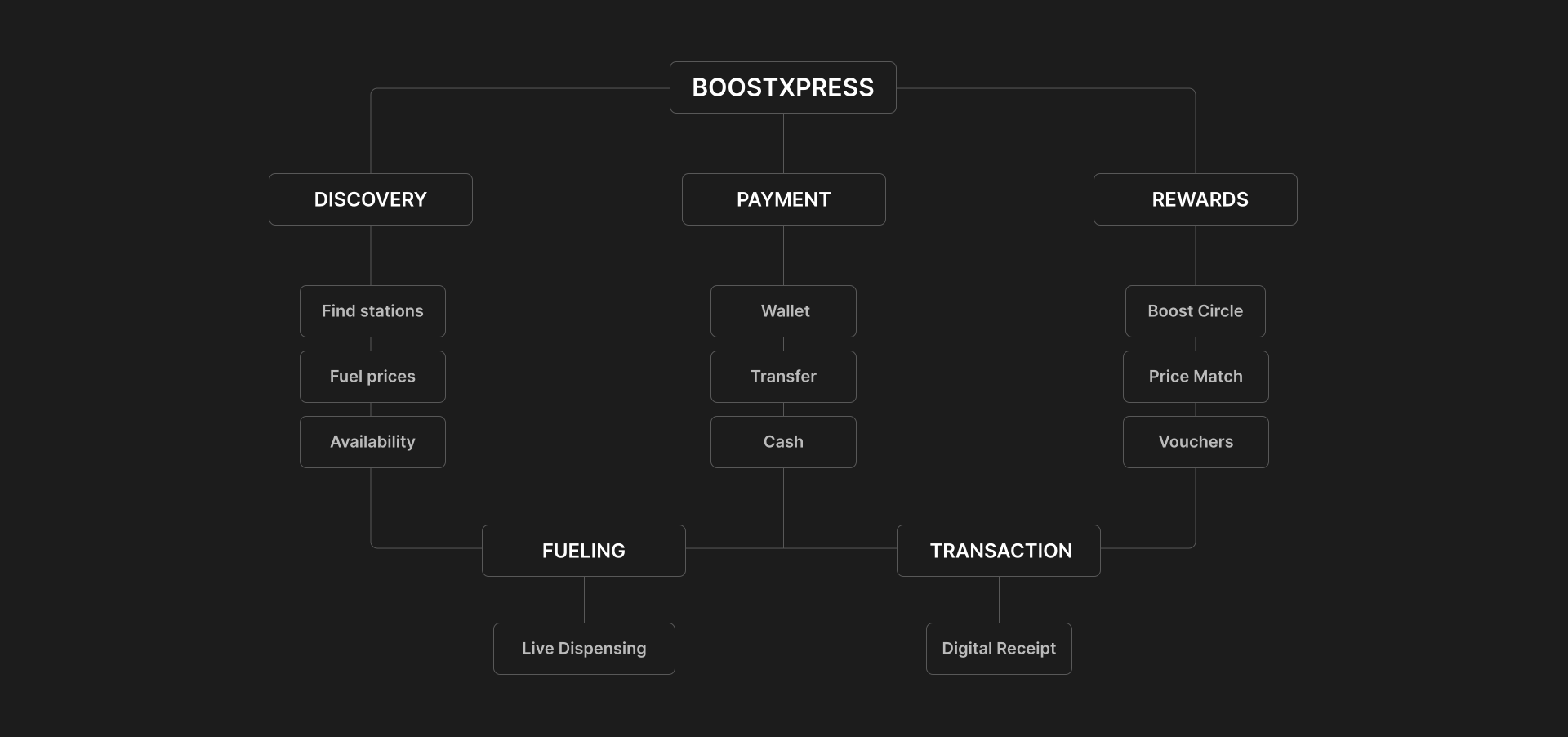
A connected digital fueling ecosystem.
Placeholder, Station discovery
Find partner stations, compare fuel prices, and check availability before arrival.
Placeholder, Wallet
Stored value for fueling, with transfer and top-up flows.
Placeholder, Payment
Pay from wallet, transfer, or cash, each mapped to one verification step.
Placeholder, Live dispensing
Real-time fueling progress with a final quantity and transaction summary.
Placeholder, Transactions
A complete, searchable history of every fuel purchase and receipt.
Placeholder, Vouchers
Campaign and promotional vouchers applied at the point of payment.
Placeholder, BoostCircle
Rebates and referral rewards layered around the core fueling journey.
Placeholder, Price Match
Competitive pricing signals that keep purchases inside the ecosystem.
Placeholder, Analytics
Station-side visibility into transactions, volumes, and attendant activity.
Placeholder, Boost Credit
Foundation for future financial services built on transaction history.
Key experience
Making an invisible transaction visible.
Hero placeholder, live dispensing
The live dispensing screen at full size: real-time fueling progress on the customer’s phone, with the pump state mirrored in the app and a clear final quantity and transaction summary when dispensing ends.
Before
Customer relies on the physical pump.
Design opportunity
Bring the fueling state into the app in real time.
After
Customer sees fueling progress on their phone.
The ecosystem
Every part of the product connects to the same transaction lifecycle.
Placeholder, system diagram
A system diagram showing how the customer app, station POS, payment layer, pump, and wallet exchange transaction state in real time.
Outcome
Verified result
3,000+ users
in the first month after launch.
Placeholder, outcomes
[Add other verified outcomes only, adoption, retention, or operational figures once officially approved.]